*This is the second half of a two-part discussion on the history of Halloween. Click here to read Part I
Now that we’ve thoroughly debunked the myth that Halloween developed out of a (nonexistent) pagan festival called Samhain, let’s look at the true history of the holiday, based on the empirical historical evidence.
All Hallows
The word “Halloween” is actually a contraction (Hallowe’en) of the phrase “All Hallows Evening”, which refers to the evening before All Hallows Day or Hallowmas — more commonly known today as All Saints Day. “Hallow” simply means “holy”, like when we say of God “Hallowed be Thy Name” in the Our Father prayer, and it’s also etymologically related to the word “halo”. All Saints Day is a Catholic feast day, observed on November 1st every year, which is dedicated to honoring and remembering the saints in heaven. The tradition of memorializing the dead is one that dates back to the very beginning of Christianity.
Here’s a brief history of the development of All Saint’s Day, from the Catholic Encyclopedia:
In the early days, the Christians were accustomed to solemnize the anniversary of a martyr’s death for Christ at the place of their martyrdom.
In the persecution of Diocletian (303-313), the number of martyrs became so great that a separate day could not be assigned to each. But the Church, feeling that every martyr should be venerated, appointed a common day for all. The first trace of this we find in Antioch, on the Sunday after Pentecost. We also find mention of a common day in a sermon of St. Ephrem the Syrian (373), and in the 74th homily of St. John Chrysostom (407).
In the West, Pope Boniface IV on 13 May, 609 or 610, consecrated the Pantheon in Rome to the Blessed Virgin and all the martyrs, ordering an anniversary.
Pope Gregory III (731-741) consecrated a chapel in the Basilica of St. Peter to all the saints, and fixed the anniversary for 1 November.
Pope Gregory IV (827-844) extended the celebration on 1 November to the entire Church.
The vigil [All Hallows Eve] seems to have been held as early as the feast itself.
When the early Church would commemorate the dead, it would typically be through pious practices like saying Masses and offering special prayers, and these things would often begin at sundown the night before the feast day. This was known as a vigil, which the Catholic Encyclopedia describes as follows:
In the evening [before a feast day], the faithful assembled in the place or church where the feast was to be celebrated, and prepared themselves by prayers, readings from Holy Writ (now the Offices of Vespers and Matins), and sometimes also by hearing a sermon. On such occasions, as on fast days in general, Mass also was celebrated in the evening, before the Vespers of the following day.
The vigil was a regular institution of Christian life, and was defended and highly recommended by St. Augustine and St. Jerome.
So it really doesn’t take much digging to discover that Halloween began as a religious vigil for the coming celebration of All Saints Day. But the way they observed the holiday in the 8th century was obviously quite different from our current Halloween traditions. So what lead to all of these changes? In short, various cultures developed their own folk traditions and integrated them into their observances of these vigils and feasts. Then, over time, the folk traditions became more significant in the culture than the original religious traditions, and so the true meaning of the holiday was mostly forgotten by all but the Catholic Church. But devout Catholics never stopped observing Halloween as a religious vigil, and to this day we still say special prayers and Masses for the dead.
So how exactly did our modern Halloween traditions develop? And should Christians be participating in these practices? Do any of them have “pagan roots”, even if Halloween itself doesn’t?
Jack O’ The Lantern
As you’ll see a bit further down in this post, even the harmless Jack-o-Lantern has recently been claimed to be associated with paganism, black magic, and human sacrifice — none of which is true.
The tradition seems to date to the mid-18th century, with an Irish Christian folktale: the legend of a drunkard named Stingy Jack (also known as Jack the Smith, Drunk Jack, Flakey Jack, and other names), who was known throughout the land as a deceiver or manipulator. There are various versions of the story, but they generally involve Jack tricking and trapping the Devil, and telling him that he won’t release him unless he agrees not to take his soul. The Devil agrees, but when Jack eventually dies he is denied entry to heaven for having lived a sinful life, and so being unable to enter either heaven or hell, he is doomed to roam the earth in darkness forever, with nothing but an ember given to him by the Devil to light his way, which he placed in a hollowed out turnip. Hence, the legend of “Jack o’ the Lantern” was born.
Much like the legendary “Will-o’-the-wisp”, the story of Jack O’Lantern seems to be connected to the natural phenomenon of flickering lights over peat bogs. When seen from a distance, these lights resemble a lantern, and so the folktale of Jack O’Lantern developed as an explanation for these distant lights. Cornish folklorist Sir Arthur Thomas Quiller-Couch recorded the use of the term in a rhyme used in Polperro, Cornwall, in conjunction with “Joan the Wad”, the Cornish version of Will-o’-the-wisp. The rhyme goes:
Jack o’ the lantern! Joan the wad,
Who tickled the maid and made her mad
Light me home, the weather’s bad.
European immigrants eventually brought this folk tradition to America, and turnips were replaced by the native pumpkins to be used for carving and lighting. According to the Oxford English Dictionary, the application of the term “Jack o’ Lantern” to carved pumpkins in American English is first seen in 1834.
The association of Jack o’ Lanterns with Halloween seems to have originated in Ireland, but spread to nearby countries like Scotland and Britain. According to historian Ronald Hutton who I’ve mentioned previously, citing yet again his book Stations of the Sun, in the 19th century, “turnips or mangel wurzels, hollowed out to act as lanterns and often carved with grotesque faces,” were used on Halloween in parts of Ireland, the Scottish Highlands, and Somerset, England.
On Halloween in 1835, the Dublin Penny Journal published a long story on the legend of “Jack-o’-the-Lantern”; and in 1837, the Limerick Chronicle refers to a local pub holding a carved gourd competition and presenting a prize to “the best crown of Jack McLantern”. The term “McLantern” also appears in an 1841 publication of the same paper. An account of Halloween in Scotland is recorded in 1895, in the 40th volume of a magazine called Frank Leslie’s Popular Monthly. The magazine describes masqueraders in disguise, carrying lanterns made out of scooped out turnips, who would visit homes to be rewarded with cakes, fruit, and money. Which brings us to our next tradition…
Trick-Or-Treating
The custom of dressing up and going door to door asking for treats extends all the way back to classical antiquity. The ancient Greek writer Athenaeus of Naucratis records in his book The Deipnosophists that, in ancient times, the Greek island of Rhodes had a tradition in which children would go from door-to-door dressed as swallows, singing a song which demanded the owners of the house to give them food and threatened to cause mischief if the owners of the house refused.
In Britain, at least as early as the 13th century, the tradition of “mumming” or “guising” became popular during holidays, where groups of people would put on masks and costumes and go door to door, putting on a brief play for those who answered, in exchange for food or drink. Similar practices seem to have spread to other nearby countries like Ireland, Scotland, and Wales, as well.
At some point, the Christians in these communities developed their own similar practice of going door to door asking for treats, but this was the first in history that was unique to Allhallowtide, the three day observance that includes All Hallows Eve (October 31), All Hallows Day (November 1), and All Souls Day (November 2) — also know as “The Triduum of Death”. They called their practice “Souling”, and it dates back at least to the middle ages. It involved groups of children going door to door singing songs and being given special pastries known as “soul cakes”, and in exchange they would offer prayers for the souls of the giver’s family members and friends who had passed away.
As described by the Augustinian cleric John Mirk in his 14th century tract “Festival”: “people would on All Hallowen Day bake bread and deal it for all Christian souls.” Hutton’s book Stations of the Sun says that these ‘soul cakes’ were offered with prayers for the dead to help them through purgatory, and the visitors were offered a cake with the rhyme ‘A soule-cake, a soule- cake, Have mercy on all Christen souels for a soule-cake’. (We also have a non-Catholic source from 1593 that mentions soul cakes, which I’ll get to in a moment)
An 1883 edition of St. Nicholas Magazine explains that the “custom became so favored in popular esteem that, for a long time, it was a regular observance in the country towns of England for small companies to go from parish to parish, begging soul-cakes by singing under the windows some such verse as this: ‘Soul, souls, for a soul-cake; Pray you good mistress, a soul-cake!’”
In a blog post on Aletia titled “Halloween Costumes and their Catholic Origins”, the author cites the book A Glossary of Words Used in the County of Chester, published in 1886, which explains:
When I was a boy, the customs connected with All Souls Eve were generally called “Soul caking,” but now for the most part it is abbreviated into “Souling” … The Souling used to consist of parties of children dressed up in fantastic costume, who went round to the farm houses and cottages, singing a song and begging for cakes, spoken of as “Soul cakes,” apples, money or anything that the goodwives would give them.
So as you can see, Christians simply took the tradition of dressing up and going door to door for treats — one which spans many cultures, and thousands of years — and began practicing a uniquely Christian version of it during Halloween, which is where the modern practice of Trick-or-Treating came from.
Against Catholicism
But you may be surprised to learn that the most Christian aspect of the tradition — praying for the souls in purgatory — didn’t just accidentally fade away. In truth, it was driven away deliberately — and not by pagans or secularists, but by Protestant Christians. During the Reformation, the tradition of Souling came under attack by Protestants because they rejected the notion of Purgatory, instead believing that immediately upon death a person either goes straight to heaven or straight to hell. For this reason, they thought that offering prayers for the dead was unbibical, and so they strongly denounced the practice and everything associated with it — including Allhallowtide. In 1593, Philip Stubbes, a vigorous Puritan pamphleteer and propagandist, scorned the Catholic practice of sharing soul-cakes on Halloween, which he said might better be called “fool-cakes”, since they were used “for the redemption of all Christian souls, as [Catholics] blasphemously speak”. (‘Motive to Good Workes’, p. 124)
Because, over time, Western culture became so Protestantized after the Reformation, Halloween gradually lost its original Catholic meaning — and Neo-Pagans have seized the opportunity to try to fill the void of meaning in Halloween with their own beliefs. The irony in this is that the Church, in dedicating November 1st to memorializing the dead, is often accused today of attempting to “baptize” a pagan festival, keeping some of the rituals but integrating them with Christian ideas. As I showed in Part I, though, Samhain was not a pagan festival of any kind as far as we know, so the claim that the Church hijacked a pagan holiday and Christianized it is completely unsupported by our historical records — it’s nothing more than an anti-Catholic conspiracy theory. And so the truth about Halloween is actually the direct opposite of what many people believe today; rather than Christians “baptizing” a pagan holiday, modern Neo-Pagans are actually attempting to “paganize” a fundamentally Christian holiday.
What’s also ironic is that Protestants and Neo-Pagans have been working together on this, though likely without realizing it. In fact, though, Protestant Christians have essentially become propagandists for the Neo-Pagans trying to claim Halloween as their own. A prime example of this is Jack Chick, a modern day Christian fundamentalist and anti-Catholic propagandist, known for spreading ridiculous conspiracy theories such as:
- The Catholic Church invented Islam, communism, and freemasonry, in order to undermine the faith of true Christians.
- The Holocaust was a Vatican plot, and Hitler was merely the pawn of Pope Pius XII. (Holocaust, 1984)
- The Vatican has a supercomputer containing the names of every Protestant Christian in the world, designed to make it easier to round them all up in a future persecution carried out by the Catholic Church, headed up by the Pope, who is the Antichrist. (My Name? . . . In the Vatican?, 1980)
Chick is the owner of Chick Publications, the world’s largest publisher of fundamentalist tracts — three quarters of a billion since 1960. If you haven’t heard of “Chick tracts” before, that’s probably a good thing; they’re small comic books whose purpose is to “evangelize”, though often through controversial means. In The New Anti-Catholicism, religious historian Philip Jenkins (who I referenced in Part I) describes Chick tracts as promulgating “bizarre allegations of Catholic conspiracy” to perpetuate “anti-Catholic mythologies”. Catholic Answers published a response to the claims of Chick Publications against Roman Catholics and a criticism of Chick tracts in general called The Nightmare World of Jack T. Chick, detailing the inaccuracies and factual errors, how a “typical tactic in Chick tracts is to portray Catholics as being unpleasant or revolting in various ways”, and how “Chick portrays a world full of paranoia and conspiracy where nothing is what it seems and nearly everything is a Satanic plot to lead people to hell.”
The Trick
Unsurprisingly, Chick was a fan of Alexander Hislop, another anti-Catholic conspiracy theorist, who I talked about at length in my post Is Easter Pagan? (I explain there exactly why Hislop is, to put it nicely, a complete hack). And just as he did with Easter, Hislop made ridiculous claims in his work The Two Babylons about Halloween, All Saints Day, and All Souls Day having pagan origins. He asserted that Purgatory and prayers for the dead were pagan beliefs, specifically a modified form of Babylonian worship of the dead, a claim with no historical basis. Yet Chick expanded on and promoted these ideas in his tracts, also claiming that Pagans and Neo-Pagans are actually Satanists, despite the fact that they themselves deny it. And by connecting various imaginary dots, Chick determined that Halloween is actually “the Devil’s holiday”. These ideas culminated in his 1986 tract The Trick, his first attack on Halloween.
As Scott P. Richert describes in his article Halloween, Jack Chick, and Anti-Catholicism:
By the mid-1980’s, many parents had become concerned for the safety of their children on Halloween. The rise of the subgenre of horror movies known as “slasher films,” such as the Halloween and Friday the 13th franchises, combined with stories of serial killers such as Chicago’s “Killer Clown,” John Wayne Gacy, in the popular imagination. Scattered reports of candy laced with drugs or poison, and caramel apples embedded with shards of glass, never very widespread and entirely debunked by 2002 (see Is Halloween Candy Tampering a Myth?), led parents to inspect the goodies that the neighbors they saw every day had given to their children on Halloween night.
The Trick capitalized on this unease to advance Chick’s attack on Halloween. A coven of witches is shown tampering with Halloween candy and performing incantations over it, leading, on Halloween, to the death of children and frightening changes in the behavior of others. Even though the children have been warned by their parents only to visit the houses of people they know, one of those kindly neighbors turns out to be a witch, proving that there is no way to ensure the physical and spiritual safety of any child who celebrates Halloween. Only when an ex-witch exposes Halloween as a “holy day” created by Satan to allow a worldwide conspiracy of witches to “provide additional sacrifices to him” is the kindly but evil neighbor’s plot foiled, as the parents of the affected children accept Jesus as their personal Lord and Savior and then convince their children to do so also.
[. . .]
In The Trick, [Chick] cites Hislop’s Two Babylons as his source, claiming that Halloween was first celebrated by the Druids, who offered children as human sacrifices on Halloween night:
“When [a Druid] went to a home and demanded a child or virgin for sacrifice, the victim was the Druid’s treat. In exchange, they would leave a jack-o-lantern with a lighted candle made of human fat to prevent those inside from being killed by demons that night. When some unfortunate couldn’t meet the demands of the Druids, then it was time for the trick. A symbolic hex was drawn on the front door. That night Satan or his demons would kill someone in that home.”
In other Chick tracts, similar accounts of Druidic celebration of Halloween are offered
Hopefully by now it’s abundantly clear that all of this is pure fantasy. So when we ask where all of the modern myths about Halloween came from, Jack Chick’s name should be placed high on the list of those responsible for spreading lies and misinformation.
Taking Back Halloween
As is so often the case with our modern customs, when we look at the history of Halloween we see several traditions from various Western cultures being fused together over time. But the holiday is originally and fundamentally Catholic, and I believe it’s high time we reclaim this celebration from the misconceptions and the lies about it that have overrun our culture. Halloween has nothing whatsoever to do with witches, Paganism, Druidism, black magic, Satanism, human sacrifice, etc. All of these myths have developed as a result of either Neo-Pagan historical fabrications, biased and unscientific anti-Christian anthropology, or conspiratorial anti-Catholic propaganda promoted by Protestant Christians.
Halloween is the beginning of one of the most beautiful celebrations in Catholic culture, where we honor and remember all those who have died — the saints who have entered into union with God, and those in purgatory whose souls are still being purified. Catholics believe that when we’re baptized, we become members of The Mystical Body of Christ, and so there is a very real unity between every single Christian in history — what we call “the Communion of Saints”. We are all one in Christ, and this bond isn’t severed when we die, because as Jesus promised us: “I am the resurrection and the life; he who believes in me, though he die, yet shall he live, and whoever lives and believes in me shall never die.” (John 11:25-26). This is an aspect of our faith that I plan to discuss in greater detail soon.
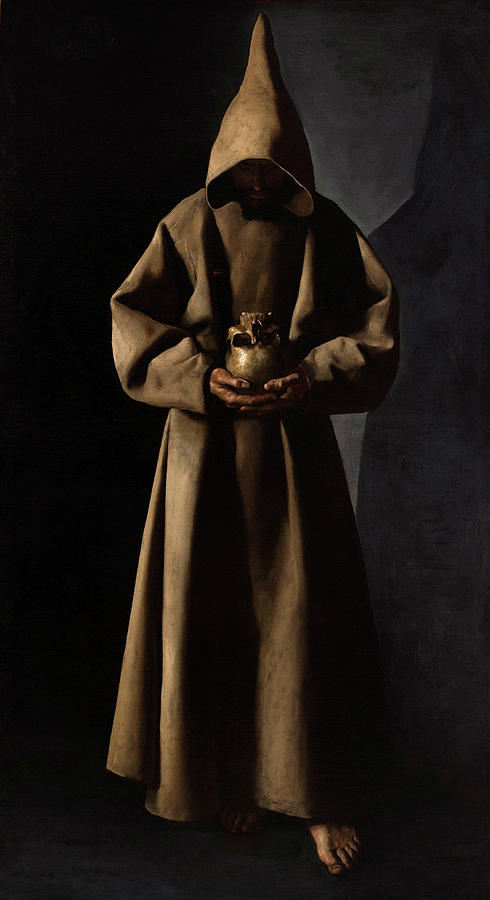
In the words of Dr. Marcel Brown of the Alcuin Institute for Catholic Culture, Halloween is “a day when Catholics celebrate the triumph of the Church in heaven, and the lives of the saints on earth. [. . .] When we think of Halloween, I think we often think of ghosts and goblins, and ghoulish faces”, Dr Brown said. “But even these, in the Catholic tradition, are supposed to be reminders of death and of the last things. So just as we commemorate the feast of All Saints on November 1st, beginning with All Hallows’ Eve on Halloween, we also think about and turn our minds to the last things: death, judgment, heaven, and hell. And really, our focus should be, since we all must die and are destined to judgment — how, then, are we to live?”
On this All Hallows’ Eve, I hope you join me in reflecting positively on the reality of death, in honoring the saints who have attained the goal we should all be striving toward — union with God — and in praying for the souls of our departed loved ones, and all who have died, that they may soon be united with our Creator.
“Eternal rest grant unto them, O Lord, and let your perpetual light shine upon them.
May the souls of all the faithful departed, through the mercy of God, rest in peace.”
– Requiem Aeternam
Happy Halloween, everyone.
God love you.
 Via Logos Agape
One thought on “Is Halloween Pagan? (Part II)”